Before the days of digital media services like Audible, YouTube and more, many people used to belt out records or settle down with a good hardcover book.
When it comes to the ways that we choose to consume media, there is a spectrum with one end being people who stick to purely physical media, while the other end consumes entirely digital media. Many people have their own unique taste and preference, and in the last few years, there seems to be more people who have been reverting to using physical media rather than consuming digital media.
Digital media was preferred over physical media because of how quickly it could be accessed and shared with others, especially with our phones being with us at all times. However, a downside with digital media is that most of these meet services that allow us to have access to digital versions of our favorite songs or books is the fact that they are littered with ads everywhere.
We have all heard Spotify's “want a break from the ads” or seen the YouTube ads that are five minutes long with no skip button. While you can buy a membership plan that removes ads, it does suck that a paywall is thethat the only way to avoid them. it is by having to pay.
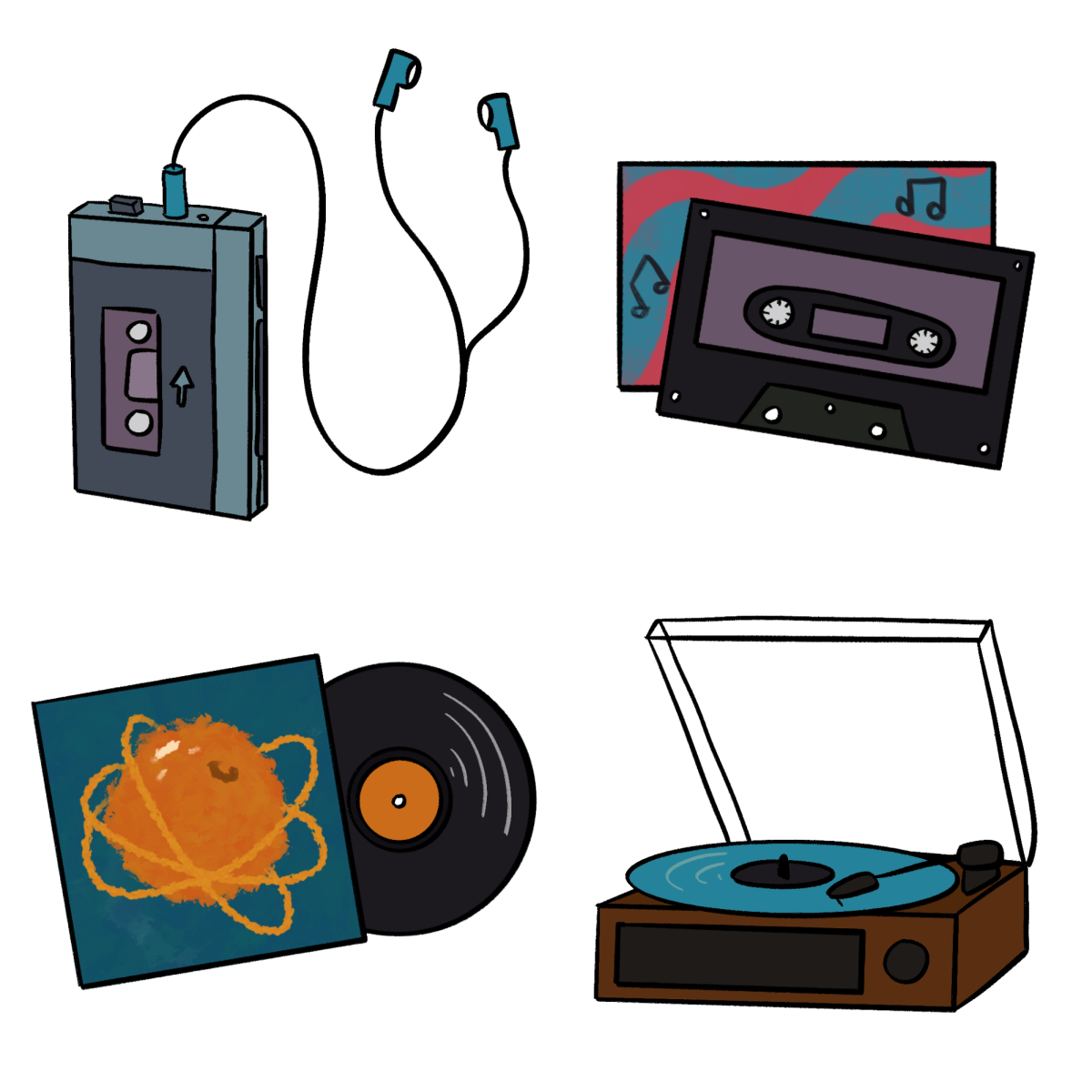
When it comes to physical media, however, there is no break in a song or a book that asks you if you want to skip the ads or mentions a membership plan. When it comes to physical media, advertisements are not added. Take a vinyl record, for example; all that is on the record are the songs, whether that be the live performance of it or the studio recording. Sometimes, if you obtain get a special edition, there’s even a small Q&A session with the artist.
While both forms of media can be taken almost anywhere, a lot of the digital media requires you to have them already downloaded. Otherwise, if you have no internet connection, then you are out of luck. However, with the physical copies, there is no internet connection needed, and they can be played in any available car, radio or DVD player
A good portion of the younger population grew up during the years when physical media was slowly being phased out for more easily accessible digitized media. We remember the nostalgic Disney fast play on DVDs, as well as having to rewind a VCR tape because we wanted to rewatch a movie. While we weren't the only ones to experience this, we were at the tail end of the glory days of physical media.
The fluctuating preference between physical media and digital media is not new. However, in the past few years, more artists and movies have been making vinyl records of their albums, which are prompting people to buy record players to listen to them. However, this is not a shared experience with all mainstream physical media.
When it comes to books, there are always people who say that having a physical book is better than listening to an audio or ebook, but that tends to beis mostly up to preference. You also rarelydon't really see people taking their albums and making them into cassette tapes or CDs. While CDs are still being made by artists, they are becoming obsolete, as many devices don't have a port for CDs anymore.
While cassette tapes are still being manufactured, it is more for collectors. They also aren't being bought as much as vinyl records or CDs because mostany devices don't have a specific port where you're able to play the tapes.
In the end, there is not a right or wrong preference when it comes to the media that we consume. The debate over the preference of tangible physical media over the digitized media that we have at the tip of our fingers will be a debate that continues well beyond this year and the next and so on. With all that all being said, I do encourage people to at least try something different, whether that means looking into the physical CDs or records of a song you like or looking at a digitized version that's more easily accessible. It's always good to try something new, especially in the realm of observing media.