
After the start of a strong year, the Disability and Pride Alliance Club has decided to go inactive for the rest of the school year.
President of the club, first-year Mariella Elm,, decided to temporarily disband the club, with the hopes of bringing it back next year.
“I think right now, it’s for the best. I have a lot of things going on. I think, in the fall of 2026, I will be able to bring it back,” Elm said. “But right now, it’s gonna be inactive, because everybody has different commitments, and it was kind of hard to put everyone’s availability together.”
In regard to the club’s accomplishments, they held two events—debuting at an event in November with the Disability, Diplomacy & Desserts with the Young Democratic Socialists of America (YDSA). In December, they hosted a wintertime event, where students watched “Christmas Ever After,” decorated cookies, and gingerbread. However, Mariella was most proud of their event Disability, Diplomacy & Desserts with the Young Democratic Socialists of America (YDSA).
“I think it was a huge accomplishment just for me as a first-year, to be able to have that event. It was so successful. There were people speaking, and we even had people tell their own personal stories. Afterwards, I felt very proud of my work and what I accomplished that day,” Elm said.
She shared a message to any underclassman, questioning whether to start a club, in addition to the reviving of the club, in the fall.
“Just know that if it is your first time making an organization, it’s okay if it doesn’t quite go well. You have so much time to do these organizations, and I realize that I started really early in my freshman year, and I feel like as I’ve grown as a person,” Elm shared.
In hindsight, Elm found there were holes within the internal structure of the club, as there were communication issues and a lack of support.
“I’m happy the members that we did have, came to a lot of the meetings. I just wish that there was more support for me, as it was my first time doing this, and I just felt like I didn’t get as much support as I wanted. It just felt unstable, and it made me feel like – why am I doing this if no one is showing up?” Elm said.
In addition to creating space for disability inclusivity, Hamline Public Safety and fellow university leaders changed the access door for Drew Fine Arts.
“I think every door should have accessibility. I think there has been a lot of issues for people with accessibility, especially if they have a wheelchair, and they can’t go to certain places because there isn’t an accessible door. But I feel like other people take it for granted that you can just open the door and walk in,” Elm said.
First-year Maddie Schoen and member of the Disability and Pride Alliance, shared some of her highlights as a club member.
“One event we had, it was fun seeing what few people came together, to be a part of it. I loved just interacting with the people in the club itself, the board members and the people who came to the meeting. It was cool seeing a bunch of different perspectives and opinions on disability, in general,” Schoen said.
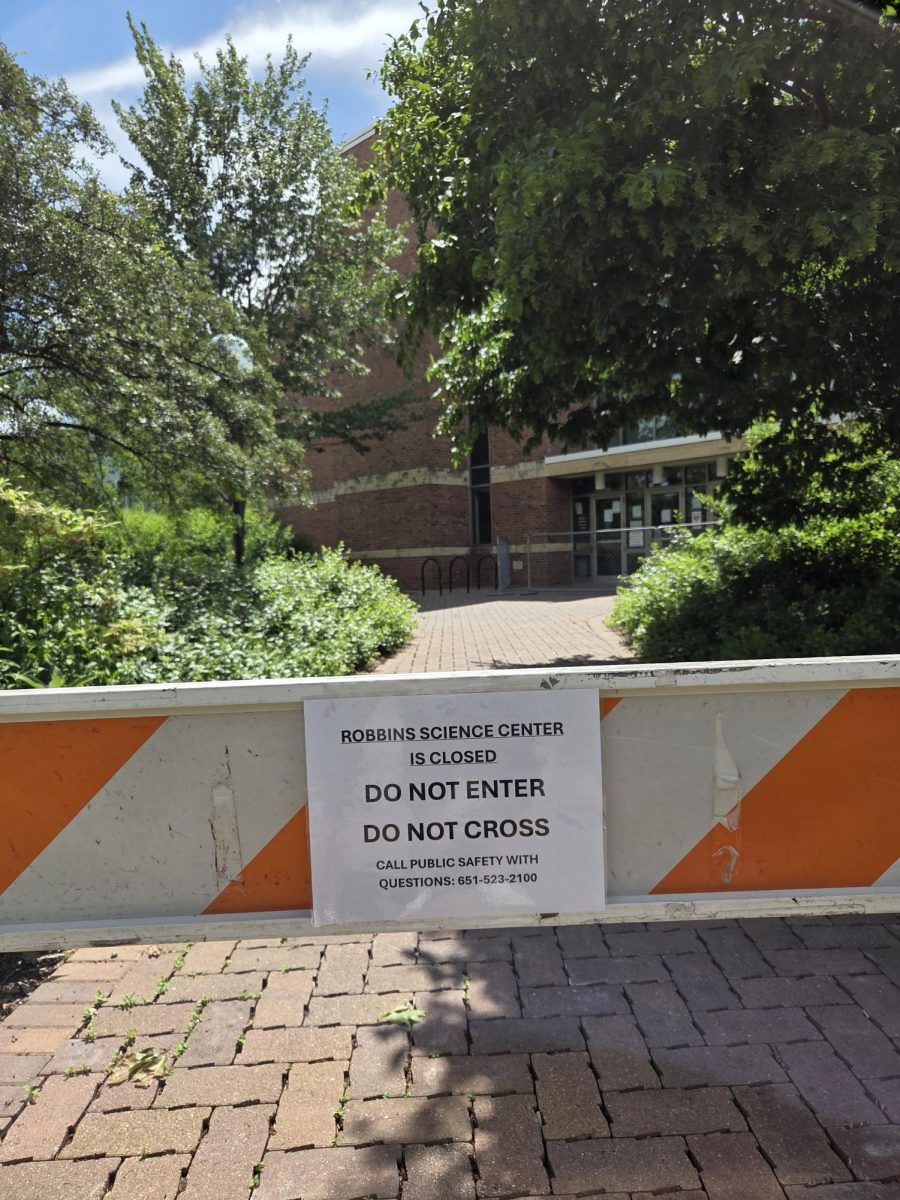
Regarding limited building access in response to ICE presence in the Twin Cities, Schone was not keen about the idea, but understood the need for it. She thought there was not clear communication on what doors would be accessible, and the conflict she and her friends encountered.
“At the very beginning, a group of my friends and I actively had to go out and search for those doors. I really do understand the severity of the ICE situation and why they did that. I just think that communication wise of what doors were gonna be accessible and whatnot, was a bit frustrating,” Schoen said.
Schoen believes, in the future, a specific and communicative layout would have been more understandable.
“An email being sent out of what specifically, it is that they’re gonna do. I feel like the message they had out initially was pretty vague. All it really was – Doors will be locked during school hours, one main door will be open. I just think they could be a lot more specific about which doors, and then public safety, could discuss with those who need particular accessible doors, and which ones would be the most useful,” Schoen said.
Schoen found some limitations with the doors that were chosen to be open.
“Maybe it was just, like, an only-stair access way to get to a door, so I feel like that’s really restricting to those who are incapable or not necessarily able to get up and down stairs fairly easily,” Schoen said.
Assistant Vice President of Hamline Public Safety, Illiana Delgado helped ease out some of these concerns and confusions.
“As part of a broader campus safety approach implemented earlier this year, buildings have designated entry points that can be secured quickly,” Delgado said via email.
She proceeded to mention that Public Safety and university leaders collaboratively revisit and review building access.
“The approach has been to move toward designated primary access points for each building. Wherever possible, the designated entry door is accessible and has card-access entry so it can be locked quickly and remotely,” Delgado said via email.
As the additional card readers are installed across campus, Delgado hopes to continue expanding access in more intentional and flexible ways, including locations such as Drew Fine Arts.
“This is something we continue to review, receive feedback on and adjust over time. It is important that our campus feels welcoming, inclusive, supportive and safe,” Delgado said via email