Over the summer, a Summer Collaborative Undergraduate Research (SCUR) project took place, looking at the repeated pattern of bird strikes that have occurred on campus in the recent semesters.
“We did surveys around campus; that was one of the biggest parts of our data collection. We surveyed all the buildings at least once a day,” Researcher junior Lexi Hermanson said.
With these surveys, they were able to count the number of deceased birds, as well as the species of birds on campus.
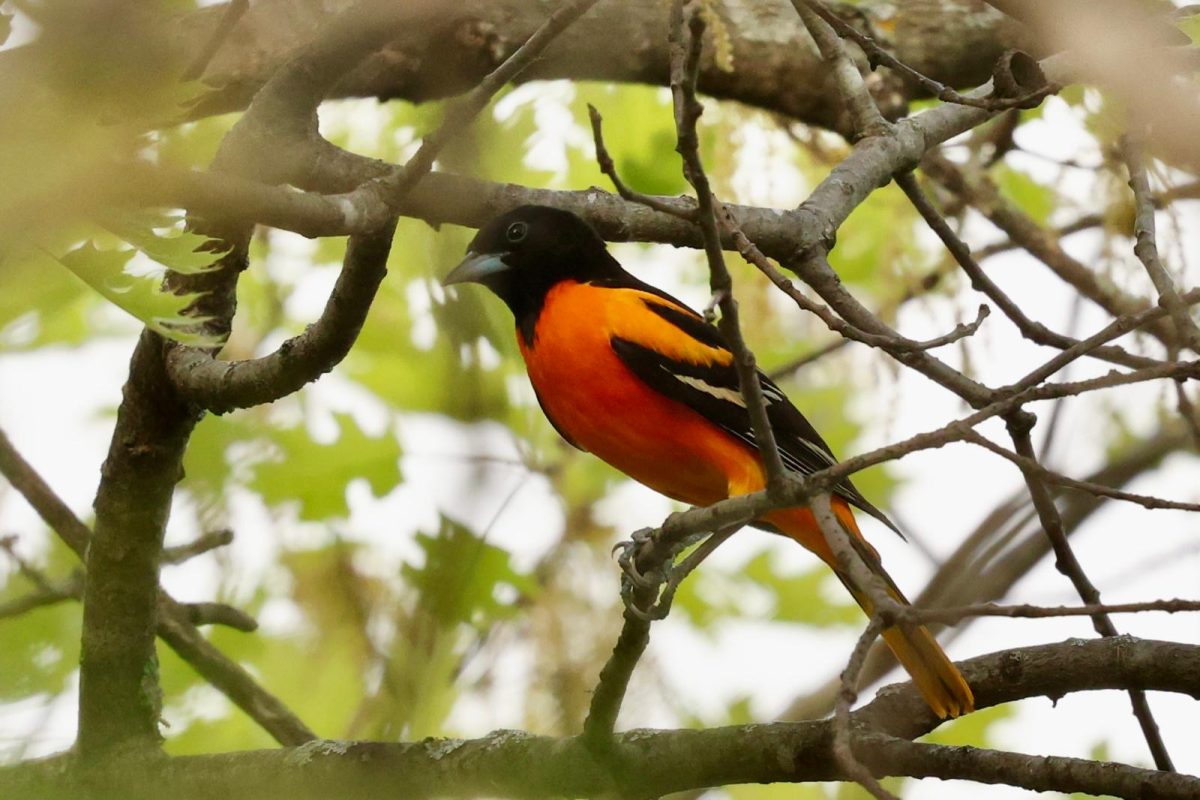
“We were able to know what species lived on campus, so if we did find a dead bird, we would know if they were resident on our campus. That was very helpful because we knew that the birds that died weren’t resident on our campus; they were migratory birds,” Hermanson said.
The migratory patterns of birds are more heavily concentrated in the fall and spring as compared to the summer.
“A big thing is continuing bird strike surveys in the fall. We haven’t started yet, but there have been more dead birds on campus,” Hermanson said.
Continuing the research into the fall also allows more students to be involved in the research.
“We’re trying to find students that are interested in this area of focus and interested in this research to do a bird strike survey once a week. We hope to find enough students to do a survey every day of the week,” Hermanson said.
The issue of bird strikes on campus has been a focus of students on the Hamline campus since at least last fall. However, the issue of migrating bird strikes extends past just the Hamline Campus.
“[Hermanson and The Oracle’s Design Editor junior Lauren Ness-Schrupp] reached out to other campuses in the Twin Cities area,” Professor of Anthropology Brian Hoffman said.
The other schools include St. Thomas and Macalester College.
“We found out St. Thomas is doing research similar to ours, so we were able to talk about solutions and ideas going forward with them,” Hermanson said.
Solutions for preventing bird strikes range widely in price, and in how labor intensive the process of installing them is.
“Macalaster has a building with Retrofits on its windows, which is something we’ve looked into here,” Hermanson said.
Retrofits, which are visible patterns added to window glass, can be embedded into windows to make them safer for birds migrating from different areas.
“We met with members of the American Bird Conservancy, who we met through Paul Bogard, and they are looking into a bird strike mitigation program for College campuses specifically,” Hermanson said.
There are other options for mitigation of strikes that are more cost effective and engaging for members of the community.
“We wanted to look into a more DIY method approach, which could be designs and decals or having someone create an art piece that goes on the window,” Hermanson said.
The use of community resources and talent is cost effective and a way to motivate students and members of the Hamline-Midway neighborhood involved in the project.
“We want a multifaceted approach so everyone can contribute, and everyone has a say. Any environmental topic is everyone’s issue,” Hermanson said.
While no decisions have been made regarding a solution, students who want to get involved can scan QR codes throughout campus.
Summer research looks to mitigate bird strikes on campus
September 16, 2025
Categories:
Story continues below advertisement
More to Discover