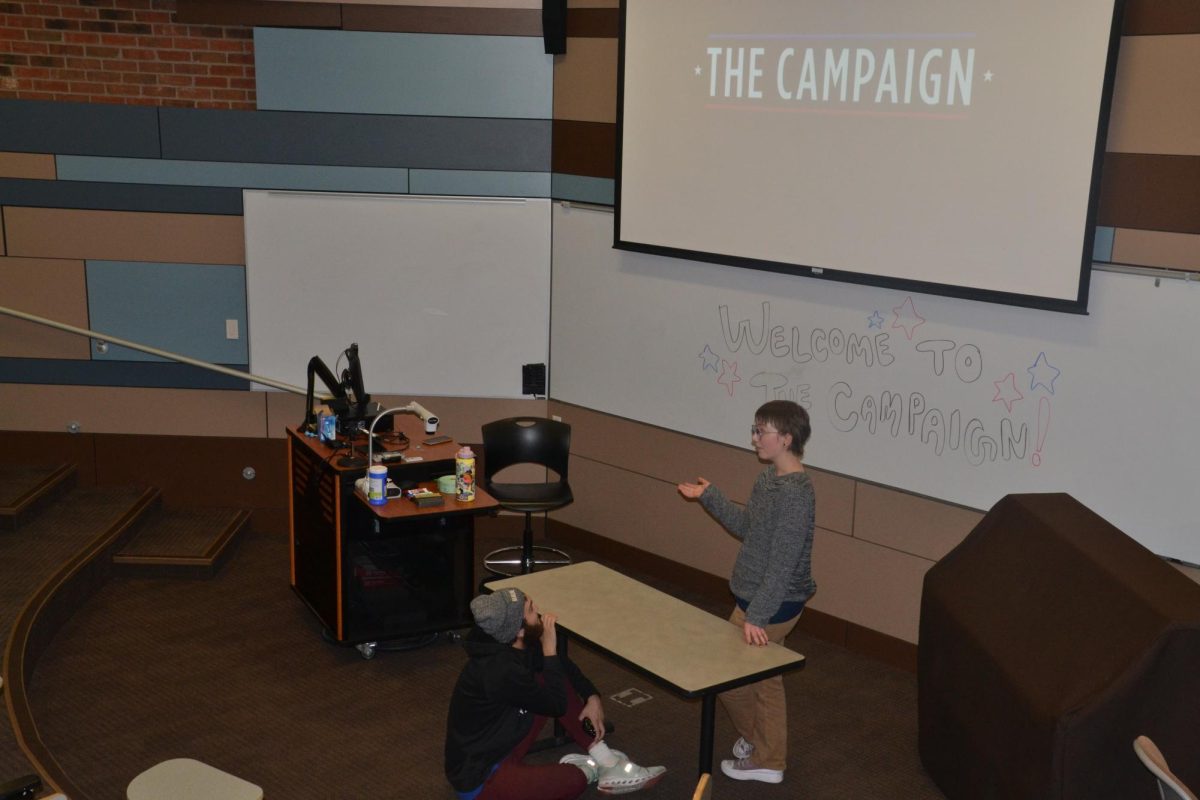

The Minnesota Precinct Caucuses took place Feb. 3 at 7:00 p.m. The precinct caucuses are an important part of the process by which parties set their platform, establish an agenda for endorsing candidates and overall define their goals and values.
A caucus is a local, party-run meeting, not run by the state government, unlike a primary. They are meetings run by the primary political parties, with locations selected by the parties. Parties can set the participation requirements, and parties also run their caucus meetings differently. Caucuses last between one and two hours, and convene quickly on election delegates and nominations. To find a caucus, visit the website of the Secretary of State and use the Caucus Finder Tool. Locations and times are also listed on the respective political parties’ websites.
It’s helpful to understand that these caucuses are a preliminary yet significant part of the political agenda-setting process. They take place in small rooms, such as classrooms or neighbors’ houses. According to sophomore Alex Bundieck, who has prior involvement in caucuses dating back to 2024, there was an uptick in interest this year.
“It’s different in the cities, I think. But in 2024, we didn’t have that many people. We filled up like a classroom. So a lot more people, a lot more interest this year. The main thing is that people can present resolutions to the party, so we can, like, have the DFL (Democratic-Farmer-Labor) or the Republican Party take the policy of this or that,” Bundieck said.
This process begins with a series of conventions centered on delegations. These are a way to filter through delegates, and party delegates can go on to endorse state and federal candidates, including the governor. They will then attend their parties’ respective conventions before the presidential elections. If resolutions gain enough support from attendees, they can become part of the party’s official platform. This is the result of communication between attendees and delegates, and involves campaigning for the party on political efforts such as canvassing local communities. Straw polls are a common way of testing public engagement, which are unofficial ballots that delegates pay attention to. Although it is a procedural event, this year’s caucuses have already had an interesting political play, according to Political Science Professor David Schultz.
“The fact that it was literally just days before the caucuses that [Senator Amy Klobuchar] announced her candidacy for the governor. And I just found that interesting because strategically it was a very smart move on her part.” Schultz said, “That by waiting as long as she did, she sort of kept other people who might have been thinking about entering the race, you know, guessing what she’s going to do, and she dissuaded any opposition from entering the field.”.
Schultz also further emphasized the importance of youth participation in local politics, as did Bundieck. Despite being seen as something mundane and sometimes even boring, caucuses are an essential part of seeing and experiencing politics in an environment that concerns something as simple as a pothole. However, potholes are not enough of a motivation for the kind of political change that can be seen from the caucus turnout numbers.
Minnesotans came forward across the country to express themselves in the tens of thousands. According to the Minnesota Democratic-Farmer-Labor Party (DFL) website, they saw a reported 30,000 attendees from around the state. The DFL also stated that in places such as Eagan, over 75% of those were first-time attendees. The recent caucuses have had a historic turnout, which makes sense, considering the recent events concerning not just the Twin Cities but all of Minnesota.
The recent immigration crackdown, occupation and fears of assaults on vulnerable communities are bringing communities together. There is no coincidence that, with this turnout, Minnesota politics is under a national spotlight, with many questions about what Minnesota will look like under the next governor and how the state will respond to the challenges it faces. It’s easy to lose sight of the fact that all of this comes from neighbors speaking to each other, in someone’s garage, or their backyard or students in a classroom. The precinct caucuses are the very humble grassroots of our democratic process, easily lost in the debate over national policy.